You already know what happened.
The hard part is knowing why — and what to do differently next time.
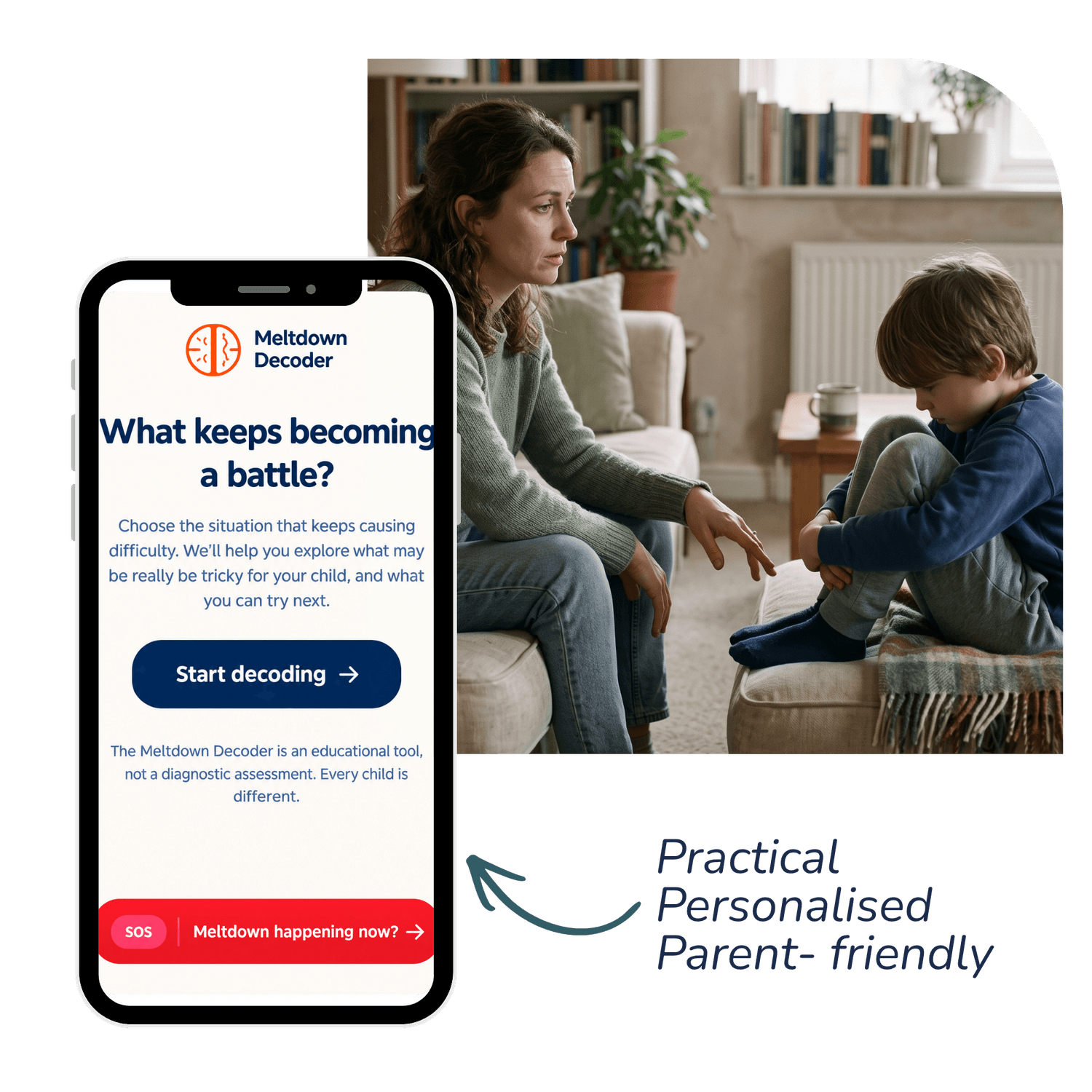
Answer a few questions about the situation that keeps going wrong, and The Meltdown Decoder shows you which skills your child may be missing, which sensory needs may be unmet, and what to try before the next meltdown.
For parents of children aged 6–16 stuck in the same everyday battles — diagnosed or not.
See what's actually making the situation hard — missing skills,
unmet sensory needs, or both
Get the words and strategies to use the very next time it happens
Know which skills to build, and how to build them through everyday life
Come back whenever something shifts — because your child keeps changing
Does this sound familiar?
You've read the books. You've tried the reward chart.
You've stayed calm when every part of you wanted to shout.
And you're still here, most days, watching the same thing go wrong in the same way.
You can't work out why it's fine on Tuesday and impossible on Thursday
You've been told to be firmer. You've been told to be gentler. Neither worked
You're managing the behaviour, but nothing is actually changing
You lie awake afterwards thinking: what am I missing?
Behaviour isn't the problem — it's the clue. When a child resists, refuses or explodes, they're telling you something is too hard.
The Meltdown Decoder helps you work out what.
In a few minutes The Meltdown Decoder
will help you explore:
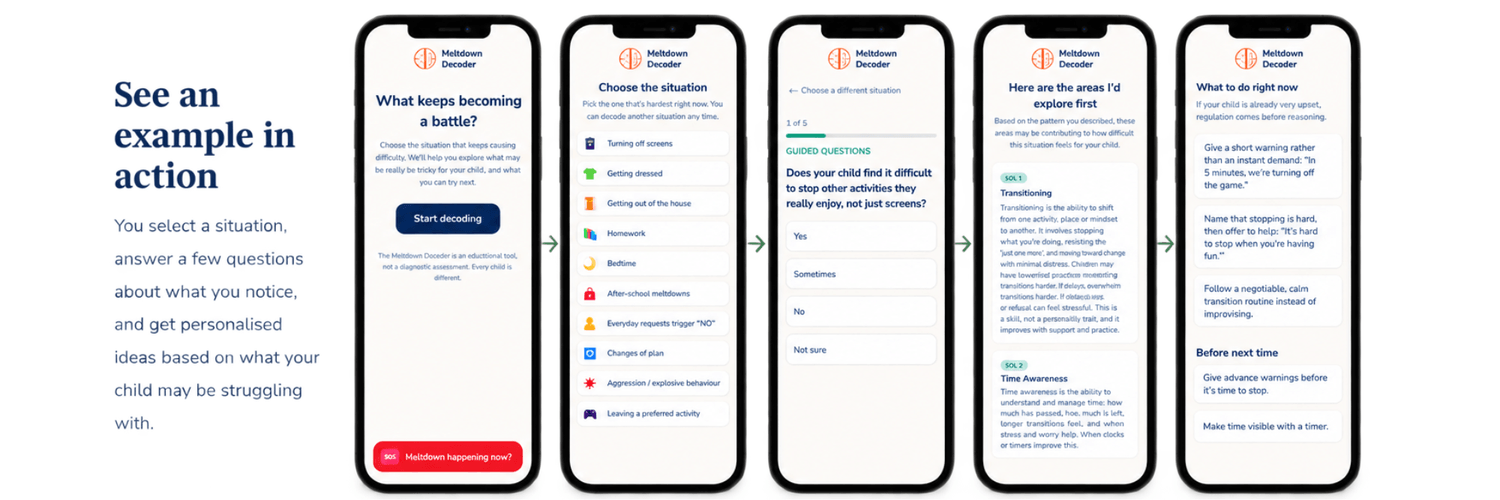
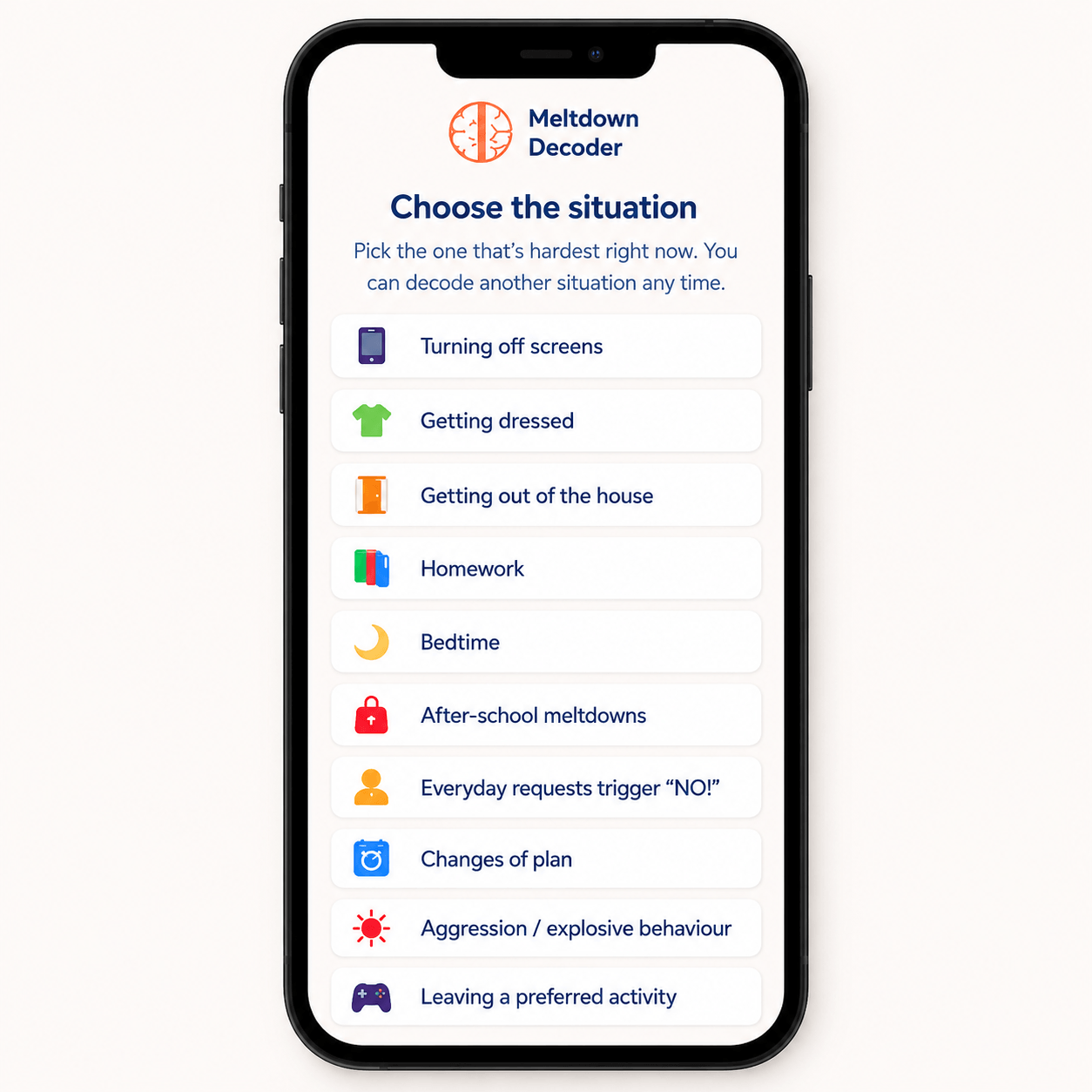
1. Choose your situation
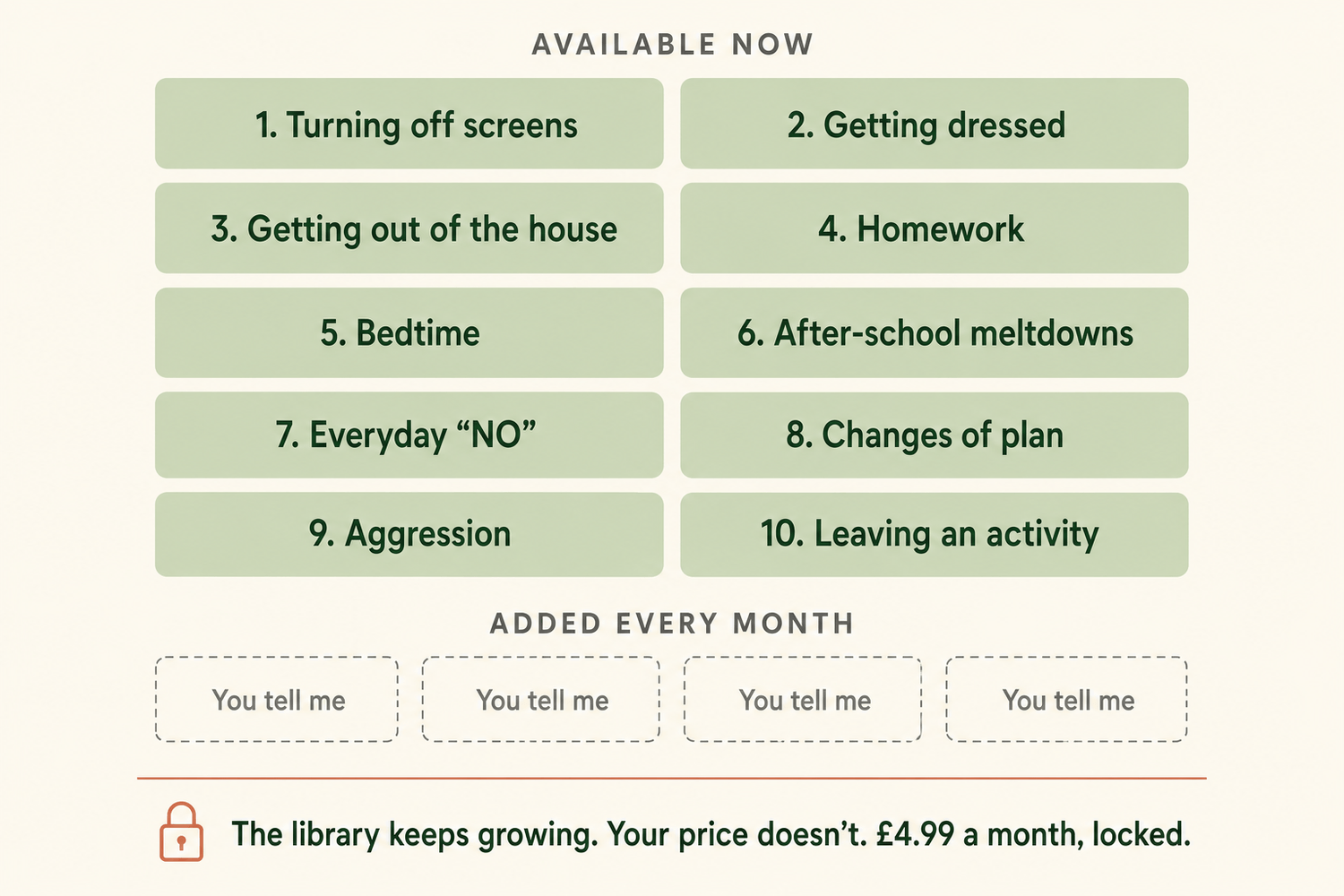
Ten of them, and one will be uncomfortably familiar.
(new situation added every month)
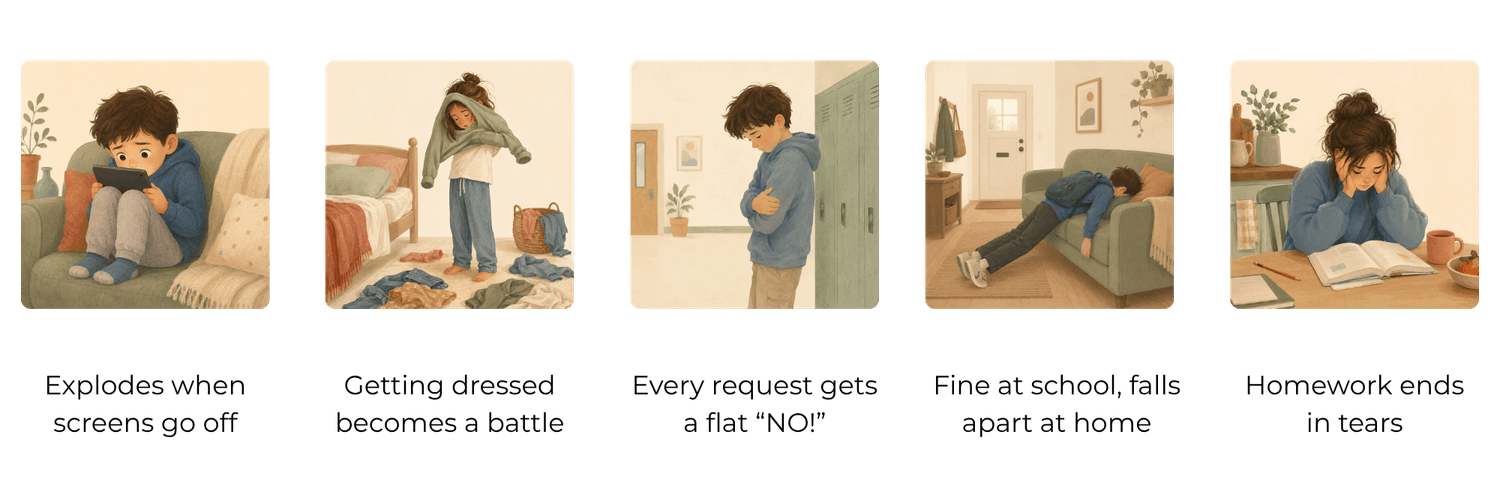
📱 Turning off screens
👕 Getting dressed
🚪 Getting out of the house
📚 Homework
🌙 Bedtime
🎒 After-school meltdowns
🙅 Everyday requests trigger "NO!"
🔄 Changes of plan
💥 Aggression / explosive behaviour
🎮 Leaving a preferred activity
2. Answer six questions
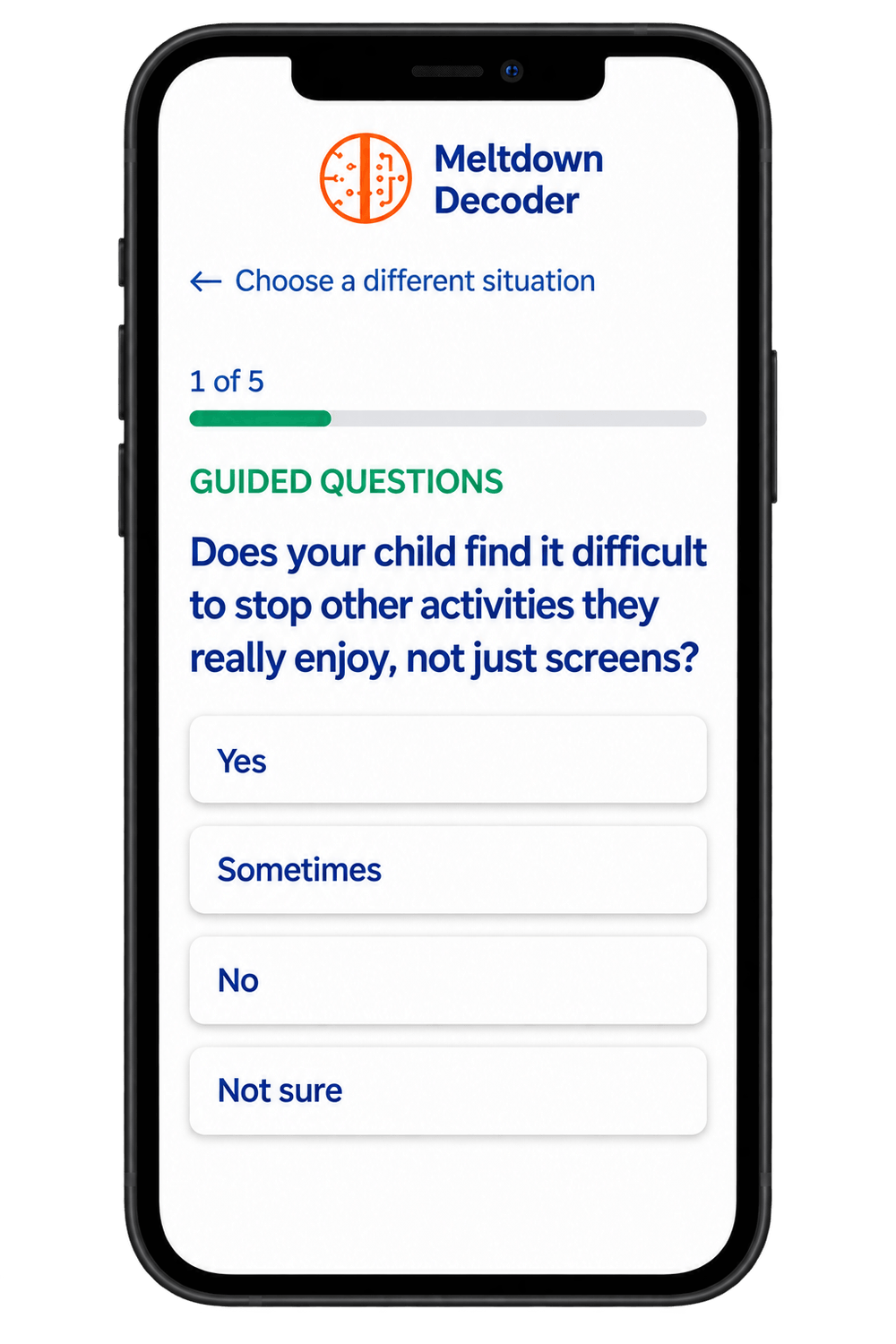
Simple questions about what actually happens
What comes before it — the trigger and the conditions
What your child does — what it actually looks like
What happens afterwards — recovery and repair
What you've already tried — and whether it helped
"Not sure" is always an option.
It takes less than a minute to answer.
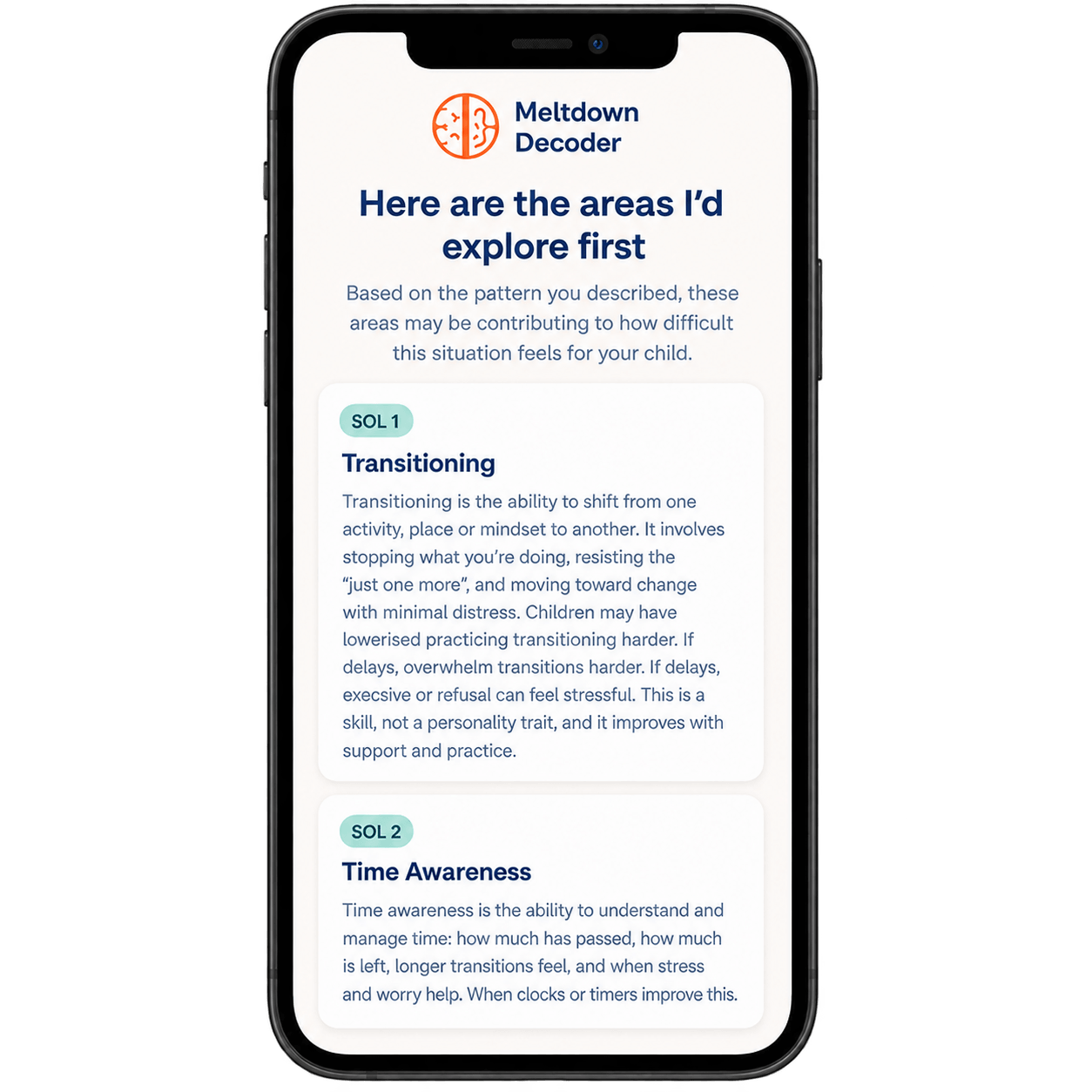
3. Get your tailored plan
Built from your answers, not general advice
What's making this hard
Thinking capacity — how much your child had left in the tank
Skills — what they may not be able to do yet
Sensory differences — what their body may be dealing with
What to do about it
What to do right now, today
What to change before next time
Try saying this instead — the exact words to use
Where this goes next
The area worth building on over time
What to watch for as things shift
And you can run it as many times as you need.
When it's happening right now
The Meltdown Decoder SOS
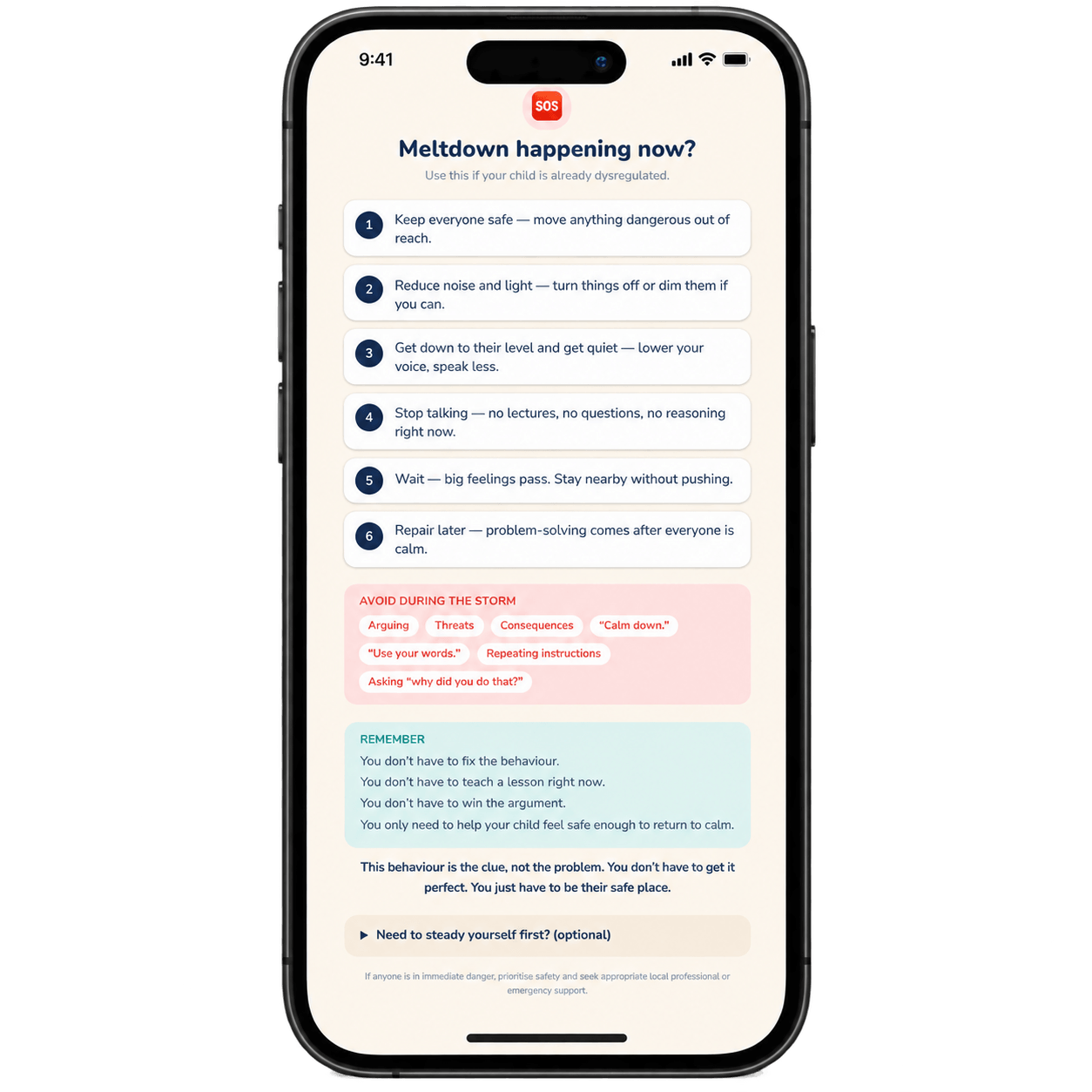
Decoding is for afterwards. But sometimes you need help at 7:40am, mid-storm, with a child on the floor.
There's a red Meltdown Happening Now SOS button on every single screen. One tap and you get six steps to get through the next ten minutes — what to do, what to stop doing, and what to say nothing about until everyone's calm. There's a section for steadying yourself first, too, because you can't co-regulate anyone while your own nervous system is in survival mode.
It's there whenever you need it.
You don't have to decode anything first.
Why parents keep coming back
This isn't something you use once and file away.
Your child changes. What made mornings hard at seven isn't what makes them hard at eleven.
A situation you'd cracked comes back in a new form.
A second child needs something completely different.
So whether the next battle is screen time, getting dressed, homework, bedtime or something completely different, you’ll have somewhere to start.
So you come back — and each time you get an answer for the child in front of you now,
not the one in a book.
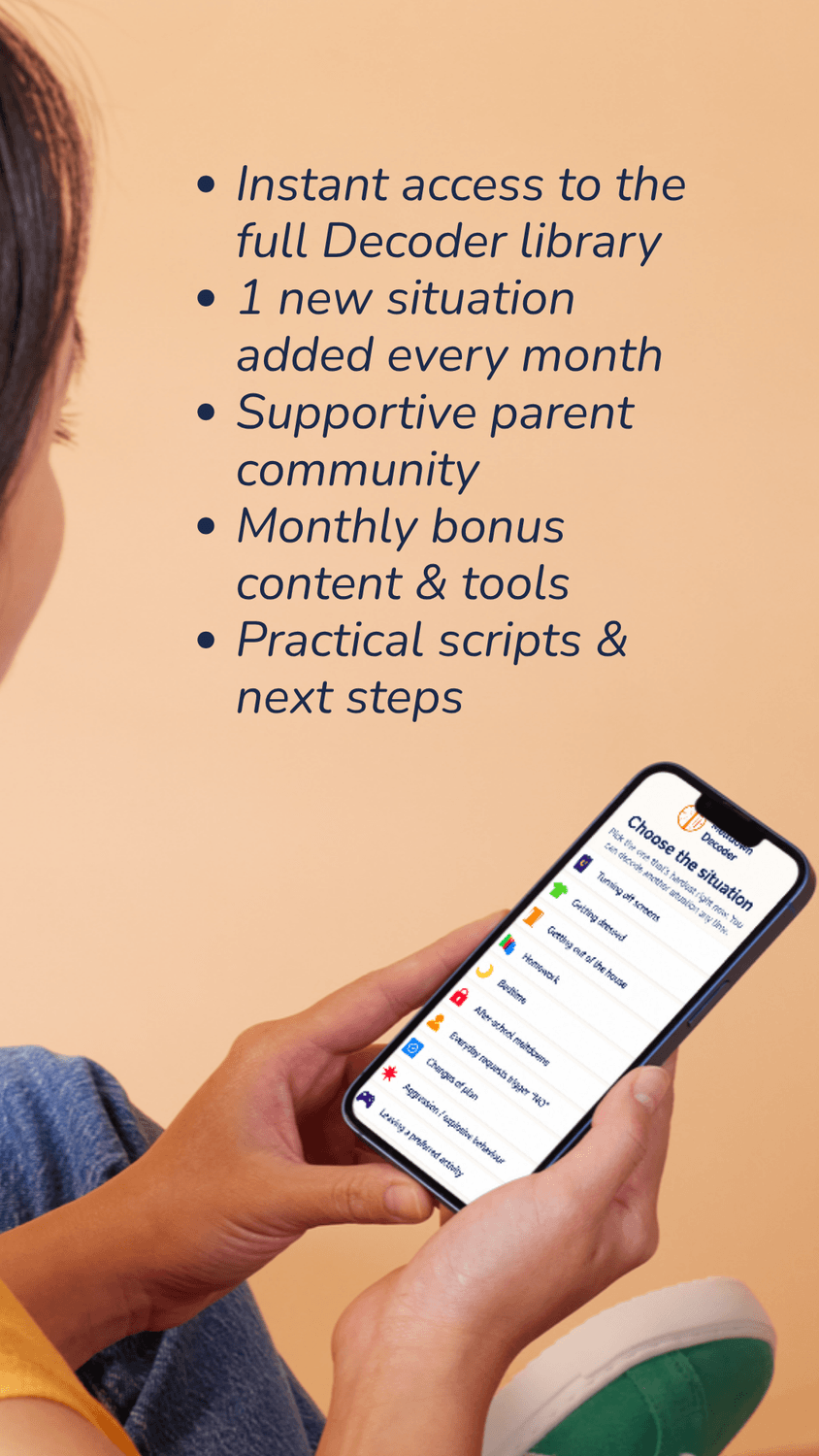
Your membership includes:
£4.99 Founding Member Price - locked in while you remain a member
Unlimited use of all ten situations — for every child in your family
Meltdown First Aid, one tap away from any screen
A brand-new situation added every month, based on what parents are actually asking me about — each one a full guided decode, not an article
Practical scripts and next steps you can use straight away
A say in what gets added next
Support inside the Decode Community
Less than a coffee and cake —
for something you can open at 7:40am on a Tuesday when it's all going wrong again.
Where the Meltdown Decoder comes from

I'm Izabela. I have a degree in psychology, I'm an ADHD coach, and I trained under Dr Ross Greene — the author of The Explosive Child.
Every question in the Decoder, every explanation and every script, comes from the tools I use with families in my coaching practice. Not theory, and not generic parenting advice — the things I've watched work, with real children, in real kitchens, on real Tuesday mornings.
The Decoder puts those tools in your pocket, so you don't have to wait for an appointment to use them.
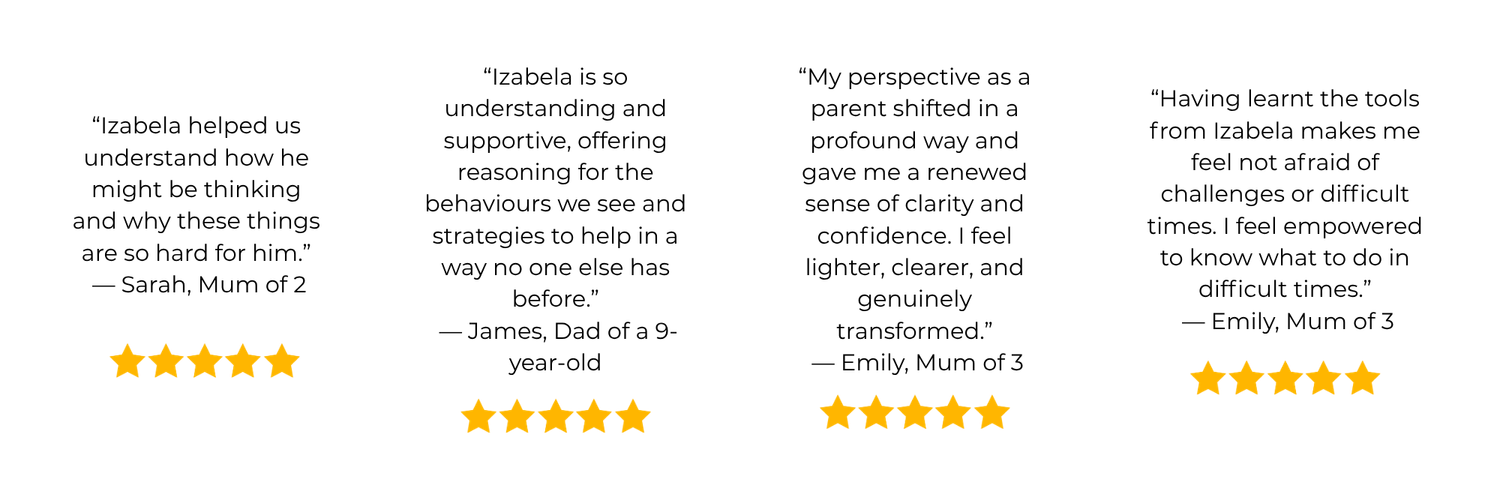
From parents I've coached one to one using this approach:
Founding member launch
The Decoder is brand new!
That means two things:
The honest one first: I don't have Decoder reviews to show you yet. The first parents are only just getting started.
Now the good part. Founding members pay £4.99 a month and keep that price for as long as they stay — even as the library grows past ten situations, past twenty.
And you get a direct say in what comes next, because the situation I add each month come from what founding members tell me they're stuck with.
You won't be reading someone else's plan.
You'll be shaping it.
Frequently asked questions:
How is this different from a parenting book or course?
A book tells you how children in general work. The Meltdown Decoder responds to what you tell it about your child, in this situation — so you get a starting point that fits, not a chapter to translate.
Does this diagnose my child?
No. It helps you identify areas worth exploring based on the patterns you describe. It does not diagnose your child.
Is it just for diagnosed ADHD/autistic children?
No. Use it whether your child has a diagnosis, is waiting for assessment, or has neither. It works from what's happening, not from a label.
My child is 14 — is this still for them?
Yes. The Decoder is built for children aged 6–16, and the questions and strategies adjust to older children. Meltdowns don't stop at ten; they just look different.
Can The Meltdown Decoder replace professional support?
No. The Meltdown Decoder is an educational tool designed to help you notice patterns, explore what may be making situations difficult for your child, and find practical strategies to try. It can complement professional support, but it does not replace individual assessment, diagnosis, therapy, medical advice or crisis support.
Can I use it more than once?
Yes! Use it whenever a situation is confusing or keeps happening.
Can I cancel my subscription at any time?
Yes. You can cancel whenever you like. Your access will continue until the end of your current billing period, and you won’t be charged again after that.